


Endodontics
Save Your Tooth with Root Canal Therapy
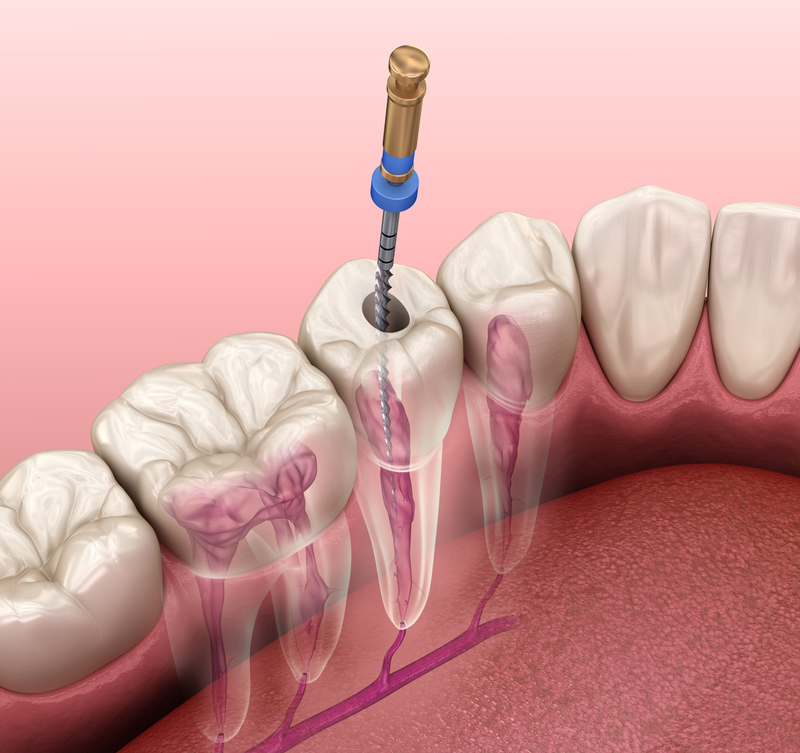
Underneath your tooth enamel and the hard layer of dentin is a soft tissue called pulp. This pulp contains the nerves and blood vessels that helped your tooth develop — but once your tooth is fully grown, the nerve is no longer essential to the health or function of the tooth. When pulp becomes infected or damaged, it causes pain and puts the tooth at risk. Root canal treatment removes the infected pulp to relieve your pain and save your natural tooth.
Root canal treatment is important to stop an infection before it has a chance to spread. With modern techniques, the procedure is comfortable and typically takes one or two appointments.
Signs you may need a root canal
Not every toothache points to an infected pulp, but some symptoms are clear warning signs. If you notice any of the following, book an appointment so we can take a look before the infection has a chance to worsen.
- Persistent or severe toothache
- Sensitivity to hot or cold that lingers after the source is removed
- Swollen or tender gum near the tooth
- A small bump on the gum near the tooth
- A tooth that has darkened or changed colour
The Root Canal Procedure: Step by Step
Local Anesthesia & Comfort
We numb the tooth and surrounding area before we begin. A dental dam is placed around the tooth to keep the area clean and dry throughout the procedure.
Accessing the Pulp Chamber
A small opening is made through the top of the tooth to reach the infected or damaged pulp inside.
Cleaning & Shaping Canals
The infected pulp is removed and the inside of the canals is carefully cleaned, shaped, and disinfected.
Filling & Sealing
The canals are filled with a biocompatible material and sealed. A temporary filling is placed while you wait for your permanent restoration.
Crown Placement
Once healed, a crown is placed over the tooth to protect it and restore full biting strength.

Your Natural Tooth Is Worth Saving
Root canals are highly successful and can ensure your tooth lasts a lifetime. Saving your natural tooth protects your bite, keeps neighbouring teeth from shifting, and avoids the cost and complexity of an implant or bridge down the road. Whenever a tooth can be saved, saving it is always the better choice.
Will it hurt?
Most patients find that a root canal is no more uncomfortable than getting a filling. We use effective local anesthesia so you feel pressure, but not pain. Some soreness in the days after the procedure is normal and passes quickly with over-the-counter pain relief.
- Preserves your natural tooth and bite
- Prevents neighbouring teeth from shifting
- Eliminates the infection and the pain it causes
- A treated tooth with a crown in place can last a lifetime