

Gum Grafts
Gum Grafting to Stop Recession and Protect Your Roots
Gum recession is not uncommon, but it leaves our tooth roots exposed, which can then cause increased sensitivity and leave us at an increased risk of tooth decay. It can also cause an uneven look to our smiles with too much tooth exposed.
Gum recession can occur for a few reasons, including untreated periodontal disease, aggressive brushing, genetics, and teeth grinding.
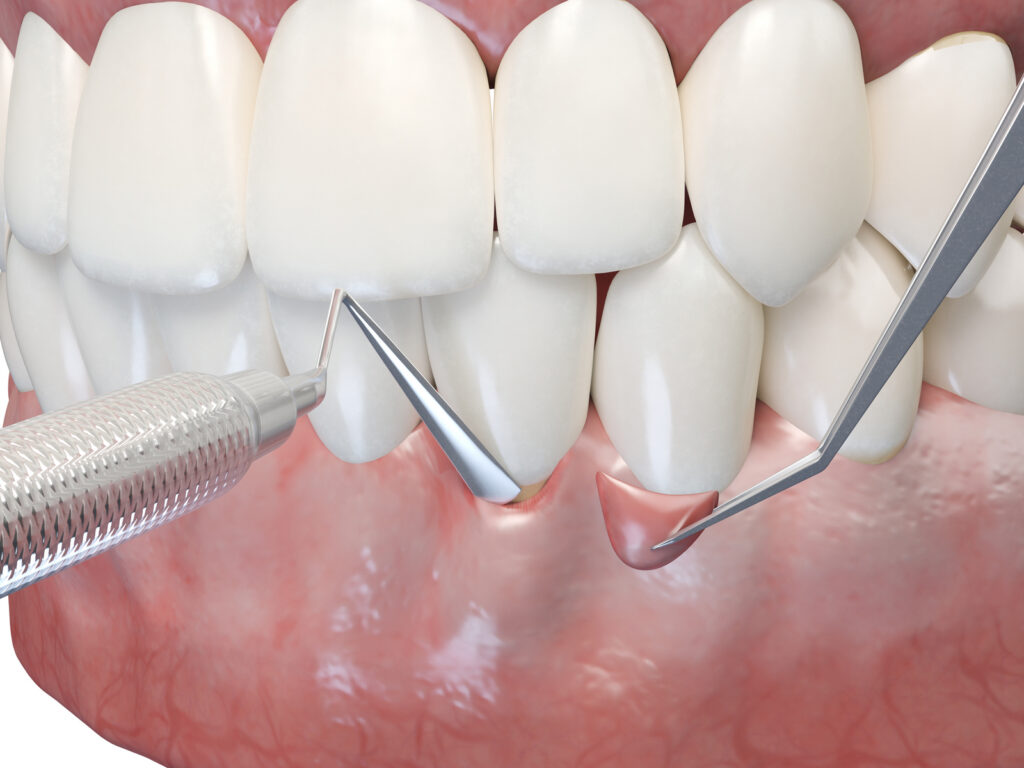
Gum grafting is a procedure that reinforces the existing gingiva while also stopping gum recession in its tracks. This protects your natural tooth while ensuring the symmetrical look of your smile. We use non-surgical tools that focus on minimal trauma to your smile and seamless healing. Gum grafts have an excellent success rate.
The Gum Grafting Procedure
Pre-Operative Assessment
We evaluate recession severity, identify the graft type needed, and plan the surgical approach for optimal results.
Local Anesthesia
Both the donor and recipient sites are numbed completely. Most patients experience no pain during the procedure.
Graft Tissue Harvesting
Donor tissue is carefully taken from the roof of your mouth or we use donated tissue (alloderm) to avoid a second surgical site.
Graft Placement & Suturing
The graft tissue is positioned over the receded area and secured with fine sutures to promote integration and healing.
Healing & Follow-Up
Most healing occurs within 2-3 weeks. We monitor progress to ensure successful graft integration and gum health restoration.