

Bone Grafts
Bone Grafting to Rebuild Your Foundation and Support Future Implants
If you have advanced gum disease or have lost a tooth, the underlying jawbone can begin to shrink, or resorb. This can cause additional issues, and lack of bone can prevent the ability for future restorations, such as implants. Bone grafts can help build back volume that has been lost, while providing a stable foundation for future implants.
To place an implant securely, there must be enough bone for the implant to successfully attach. Using our 3D technology, we can place bone grafting material with 100% accuracy so that any future implants or restorations have the highest chance to succeed.
In addition to providing a secure foundation for restorations, bone grafts help prevent facial sagging that can be associated with tooth loss. This preserves your facial structure, giving you a more youthful looking appearance.
The Bone Grafting Procedure
3D Imaging & Planning
Cone beam CT scans reveal exact bone deficiency location and volume, allowing precise graft planning.
Anesthesia & Site Preparation
The area is numbed completely, and the gum tissue is gently opened to access the bone deficiency site.
Bone Material Placement
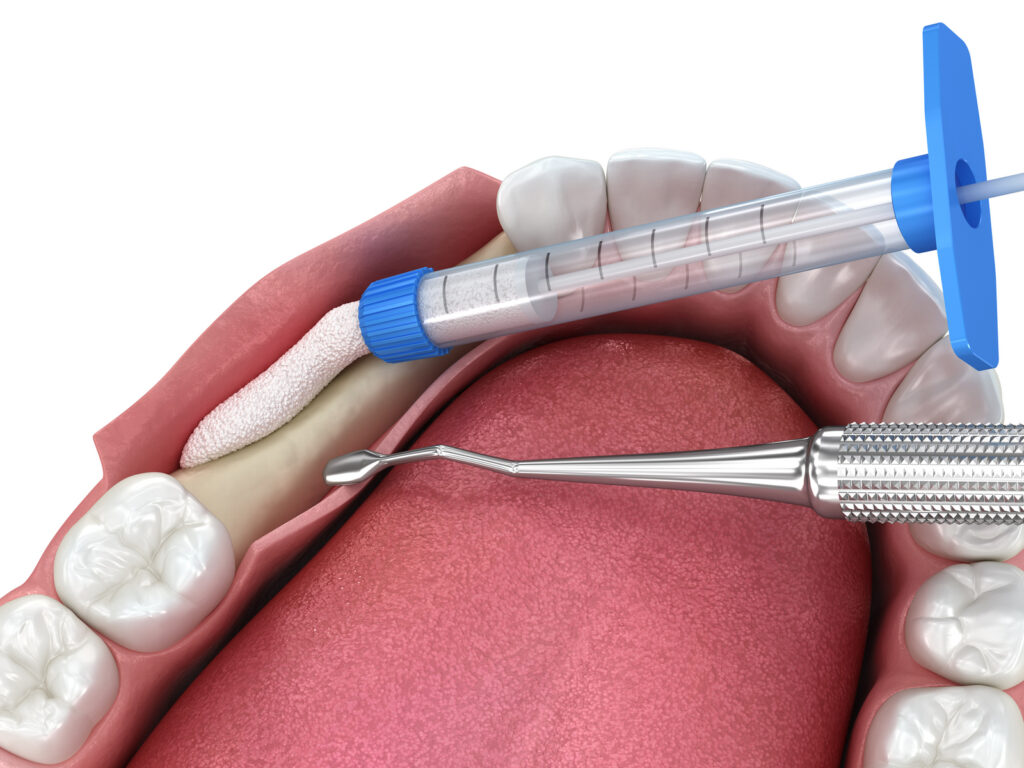
Bone graft material (your own bone, donor bone, or synthetic) is carefully placed where bone volume is needed.
Membrane Coverage
A protective collagen membrane may be placed over the graft to guide bone regeneration and prevent soft tissue intrusion.
Healing & Osseointegration
Over 3-6 months, your body integrates the graft material and generates new bone, creating the foundation needed for implants.